
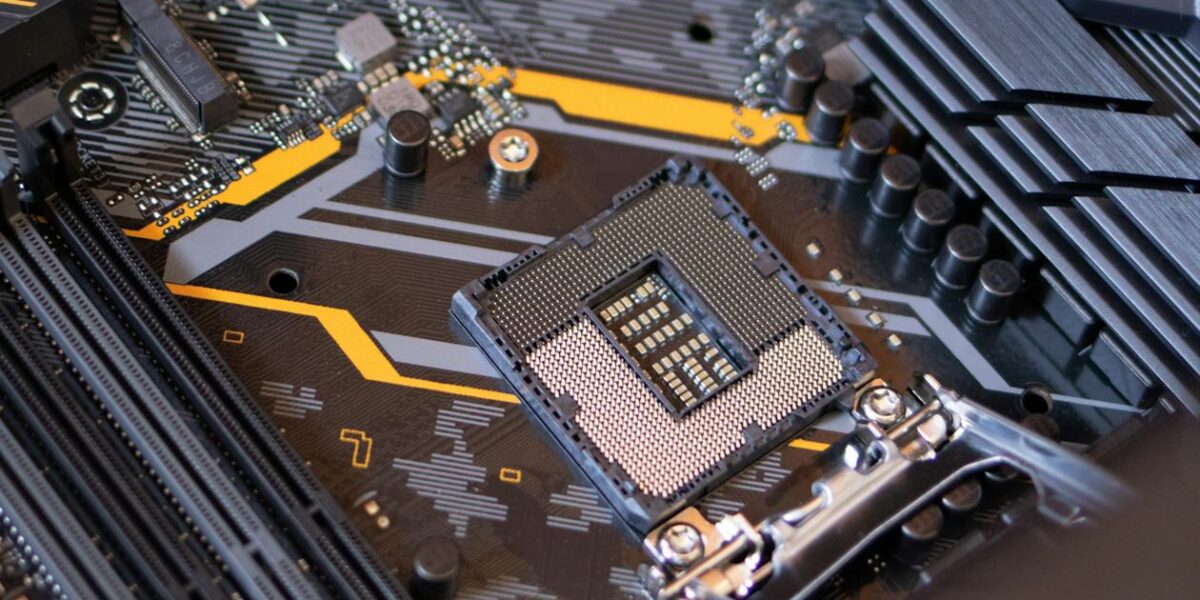
Nvidia made history at Computex 2026 in Taipei on June 1, 2026, unveiling the RTX Spark Superchip — its first processor designed to power Windows personal computers as the main CPU. CEO Jensen Huang called it “as big of a deal as the reinvention of the computer itself,” positioning the announcement alongside the launch of the GPU era in significance. For IT professionals, enterprise decision-makers, and the broader Windows ecosystem, the RTX Spark represents the most consequential shift in PC processor architecture in over a decade.
Until now, Nvidia’s role in personal computing was always supporting — the GPU inside the machine while Intel or AMD provided the CPU that made it a PC. The RTX Spark changes that entirely, combining Arm CPU cores, Blackwell GPU architecture, and up to 128 GB of unified memory in a single system-on-chip.
What Is the Nvidia RTX Spark Superchip?
The RTX Spark (also internally referred to as the N1X) is an Arm-based system-on-chip (SoC) developed by Nvidia in direct collaboration with Microsoft. It represents Nvidia’s full entry into the client computing market — not as a discrete GPU add-in card alongside an Intel or AMD processor, but as the single chip that replaces both.
The chip integrates three major components on a single die:
- Arm CPU cluster — high-performance Arm cores for general-purpose computing and OS workloads
- Blackwell GPU architecture — Nvidia’s latest and most capable GPU design, adapted for integrated use
- Up to 128 GB unified memory — shared between CPU and GPU, eliminating the memory bandwidth bottleneck that limits discrete GPU configurations in AI workloads
The design philosophy mirrors Apple’s M-series approach: tight integration between CPU, GPU, and memory on a single package, optimised for specific workload profiles. Where Apple targets creative professionals and developers, Nvidia is positioning the RTX Spark explicitly for agentic AI — autonomous AI workflows that execute tasks, access data, and interact with services without human prompting at each step.
OEM Partners — Who Is Making RTX Spark PCs?
Nvidia confirmed at Computex 2026 that six major OEM partners will ship RTX Spark-powered Windows PCs in fall 2026:
The breadth of OEM commitment — six partners at launch — suggests Nvidia has successfully de-risked the platform for hardware manufacturers. This is a key contrast with past Arm-on-Windows attempts, where OEM support was concentrated in one or two vendors at launch.
RTX Spark Technical Specifications
CPU Architecture
The RTX Spark uses an Arm CPU architecture built for Windows on Arm. The exact CPU core configuration has not been fully disclosed, but industry sources indicate a combination of high-performance and efficiency cores following patterns established by Qualcomm’s Oryon and Apple’s Firestorm/Icestorm design approaches. Anti-cheat software compatibility — historically a Windows on Arm weakness — is confirmed as natively supported at launch through driver-level integration.
GPU — Blackwell Architecture
The integrated Blackwell GPU brings Nvidia’s current-generation GPU architecture to the integrated SoC context. Importantly, RTX Spark systems will not support a discrete GPU — the chip is the GPU. This is a deliberate design decision: Nvidia is not targeting high-end gaming with this product. Instead, the Blackwell GPU’s primary role is CUDA-accelerated AI inference for on-device AI models, agentic workloads, and developer tools — not rendering at 4K 144Hz.
Memory — 128 GB Unified
The flagship configuration supports up to 128 GB of unified memory shared between CPU and GPU. For context, the current highest-memory consumer laptop configuration on x86 is typically 64 GB, and most mainstream configurations are 16–32 GB. The 128 GB figure is targeted at large language model inference — running models like Llama 3 70B or equivalent entirely on-device — without cloud dependency.
The Agentic AI Platform Vision
Nvidia and Microsoft are co-developing what they describe as an “agentic AI” computing platform. In this vision, Windows becomes an operating system that can independently execute multi-step tasks: read your email, create a draft response, schedule a calendar event, search your document library, and compile a report — all without explicit step-by-step user instruction at each stage.
The RTX Spark is the hardware layer for this. CUDA’s mature AI software ecosystem — including ONNX Runtime, TensorRT, and the broader Hugging Face / PyTorch stack — gives developers a familiar framework for building agentic applications targeting the platform. The full vision depends on Windows 12, expected in 2027, which is anticipated to include native OS-level agentic AI capabilities designed specifically for RTX Spark hardware.
RTX Spark vs Competing Windows Platforms
Enterprise IT Implications
For organisations managing Windows device fleets, the RTX Spark introduces a third Windows processor architecture alongside x86 (Intel/AMD) and Qualcomm Snapdragon X Arm. Each architecture requires:
- Separate driver validation and compatibility testing
- Updated endpoint management agent support (Intune, SCCM, Jamf)
- Review of legacy application portfolios for Arm compatibility
- Updated firmware and BIOS management procedures
- Separate hardware procurement and lifecycle policies
For enterprises operating in Saudi Arabia under Vision 2030 digital transformation initiatives, AI-capable hardware platforms like the RTX Spark directly support goals around productivity automation and AI adoption. However, deployment decisions should be made with a clear understanding of total cost of ownership, application compatibility, and the maturity of the Windows on Arm software ecosystem — which, despite significant improvement in 2025-2026, still has gaps for specialised vertical applications.
Pricing and Availability
RTX Spark laptops are confirmed for fall 2026 from Microsoft Surface, Dell, HP, ASUS, Lenovo, and MSI. Pricing has not been announced. Given specifications — 128 GB unified memory, Blackwell GPU — initial flagship configurations will likely carry premium pricing. Entry-level configurations targeting mainstream users are expected to follow the established pattern of high-specification launches followed by more accessible pricing tiers within 12–18 months.
IT Infrastructure & Cloud Services · Riyadh, Saudi Arabia
Need expert guidance on enterprise IT decisions?
Visit To Me provides vendor-neutral IT consulting, cloud infrastructure planning, and managed IT services for businesses in Saudi Arabia and globally. Fixed-price quote within 24 hours.
📍 Riyadh · 🌍 Remote worldwide · ⏰ 24h response · 📋 Written SLA on every engagement




Leave a Reply